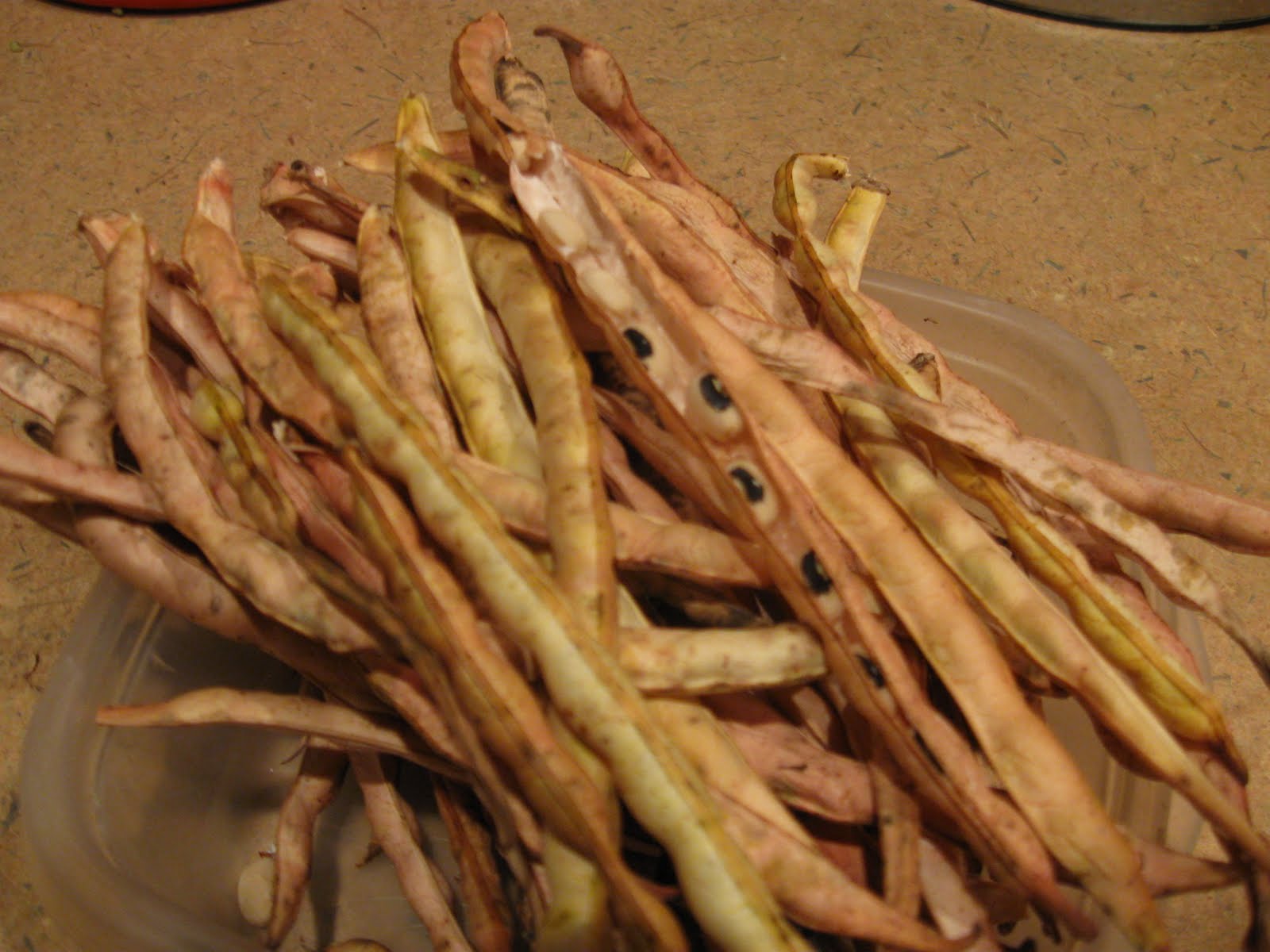
First, do a "finger" test. Squeeze the okra pod with your thumb and your index finger. Does it give? Meaning, is it soft at all? If the answer is yes, then you can pick that pod and use it in your usual cooking, like fried or roasted okra recipe. If it is too tough to squeeze, leave it alone. Seriously. Let it ripen on the vine and then collect the dried pod for the next season's seed. You can also make okra coffee in a pinch, so, it is a good idea to save dry okra seeds for these two reasons at least. Last, but not least, you can preserve your okra crop by canning, pickling, or drying. Ball book of canning
 .
.If you are a type of a gardener that appreciates home-grown mulch and compost, then okra is your best friend, just like bean stalks, cow peas, and corn. Okra has very fibrous stalks, meaning, that it provides a lot of compost material for the garden. Once you decide that you had enough of okra harvest, pull the plants and shred them into small (about two inch pieces) with your shredder or hand pruner and use in the garden right away - as a mulch at first, and when it is decomposed, as an additive to your soil. Really, you cannot waste any part of the okra plant. It is a simply amazing gift to the garden, both in food production and as a garden soil builder.